 Illustrative editorial imagery · Not an Able Air job-site photograph
THE COMFORT TAKEAWAY
A furnace blowing cold air can be caused by a thermostat setting, a restricted filter, an airflow or power problem, or a safety-control shutdown. Start with the low-risk checks below. Do not open the cabinet, touch wiring, adjust fuel components, or bypass a safety control.
The short answer
If your furnace is blowing cold air, first confirm the thermostat is in Heat mode and set above the current room temperature. Then check the accessible filter and observe whether the furnace has power. If the air stays cold, the system may have an airflow, ignition, fuel, blower, control, or heat-exchanger problem that needs professional diagnosis.
A furnace heats air and distributes it through ducts. A short burst of cooler air during a startup or fan cycle can be normal, but air that stays cold while the thermostat calls for heat is not something to solve by repeatedly resetting the equipment.
Safe checks to try first
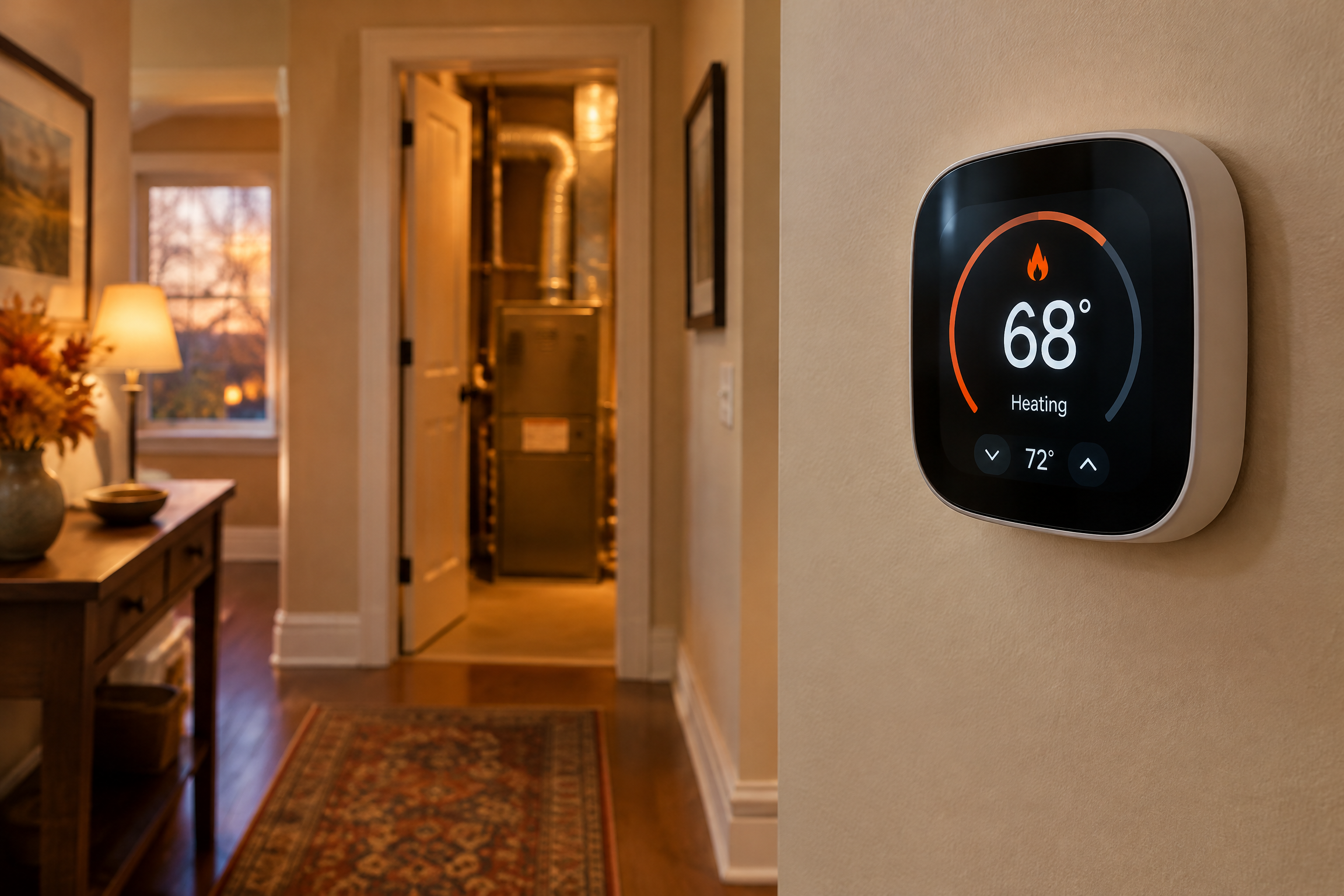
Confirm the thermostat. Select Heat, set the temperature above the room temperature, and check for a low-battery warning. If the thermostat uses replaceable batteries, install the specified type according to its instructions.
Check the filter. If it is accessible, inspect it for heavy dust or blockage and replace it only with the specified size and type. ENERGY STAR recommends inspecting, cleaning, or changing filters regularly because a dirty filter can increase energy costs and damage equipment. ENERGY STAR maintenance checklist.
Observe visible power status. From a dry, safe location, look for an HVAC breaker that appears tripped or an accessible furnace service switch that appears off. Do not repeatedly reset a breaker, remove equipment panels, or touch wiring.
Why a furnace may blow cold air
Thermostat or control issue. The thermostat may have a battery, sensor, configuration, compatibility, or communication problem. A displayed temperature does not prove the furnace completed the heating command.
Restricted airflow. A severely blocked filter or another airflow issue can cause a safety shutdown or keep the system from operating normally. Do not remove internal panels to inspect the blower or heat exchanger.
Ignition or fuel problem. A furnace may fail to heat because of an ignition, gas or oil supply, burner, venting, or safety-control issue. Never attempt to light burners or adjust gas or oil components yourself.
Blower or motor problem. The furnace may start a sequence but fail to deliver warm air because of a blower, motor, limit, or control fault. The cause cannot be identified safely from the thermostat display alone.
Heat-exchanger or venting concern. The U.S. Department of Energy notes that furnace and boiler maintenance includes combustion and ventilation concerns. If you smell combustion gases or suspect a venting problem, leave the area and contact the appropriate emergency or heating professional. U.S. Department of Energy furnace and boiler guidance.
What if you have a boiler instead?
A boiler heats water or steam and sends heat through radiators, baseboards, or radiant systems. A furnace heats air and sends it through ducts. If your home has radiators or baseboards, do not apply furnace instructions to a boiler.
You can check the thermostat and make sure vents, radiators, or baseboards are not blocked by furniture. Leave boiler pressure, burners, pumps, valves, electrical controls, and relief devices to a heating professional.
For a broader explanation of the difference, see Able Air’s boiler-running-but-house-still-cold guide.
When cold air is an emergency
Leave the property and call 911 from a safe location if a carbon monoxide alarm sounds, you smell a strong or unusual gas odor, you see smoke or fire, or anyone feels ill with headache, dizziness, weakness, nausea, chest pain, or confusion. The CDC explains that carbon monoxide is an odorless, colorless gas produced by fuel-burning appliances, including furnaces, and recommends annual service by a qualified technician and CO detectors near sleeping areas. CDC carbon monoxide safety guidance.
For a non-emergency problem, call promptly if the furnace repeatedly starts and stops, blows cold air, makes unusual sounds, trips a breaker, shows visible damage, or cannot keep the home at a safe temperature.
The Long Island next step
Before service, note the thermostat mode and displayed temperature, whether the display is blank, whether the indoor blower runs, when the problem began, whether the filter was recently changed, and whether the issue followed an outage or maintenance visit. Do not open the furnace to look for a flame or reset an unfamiliar safety control.
Able Air Conditioning & Heating Corp. provides heating, boiler, furnace, and thermostat service across Nassau and Suffolk County. See heating services, boiler repair and service, or contact Able Air. Call (516) 764-4300 when your furnace keeps blowing cold air.
A few more good questions.
Why is my furnace blowing cold air when the thermostat is on heat?
The thermostat may have a setting or battery issue, or the furnace may have a problem with airflow, power, ignition, fuel, controls, or the blower. Start with safe thermostat and filter checks, then arrange service if the air remains cold.
Can a dirty furnace filter cause cold air?
A severely restricted filter can reduce airflow and contribute to a safety shutdown. Replace an accessible filter with the specified size and type, but do not open the furnace cabinet or bypass a safety control.
Should I reset the furnace breaker?
You may observe whether the breaker appears tripped from a dry, safe location, but do not repeatedly reset it. If it trips again or the furnace remains cold, leave it off and arrange service.
How long should a furnace blow cool air when it starts?
A brief cooler period can occur during a startup or fan cycle, but air that stays cold while the thermostat calls for heat indicates the system should be checked.
Is a furnace blowing cold air dangerous?
Cold air itself is not necessarily dangerous, but a fuel, combustion, venting, electrical, or heat-exchanger problem can be. Leave immediately for a CO alarm, strong gas odor, smoke, fire, or illness.
Keep learning
Primary sources behind this guide.