
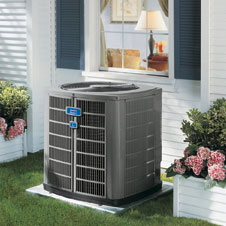
 Illustrative editorial imagery · Not an Able Air job-site photograph
THE COMFORT TAKEAWAY
Start with safe checks for the thermostat, accessible filter, airflow, and outdoor clearance. If the system still runs without cooling—or shows ice, water, electrical, or refrigerant concerns—turn it off and arrange qualified service.
The short answer
An air conditioner can run without cooling when airflow is restricted, the thermostat is mis-set, the outdoor unit cannot reject heat, the indoor coil is dirty or frozen, the duct system is leaking, or the system has an electrical or refrigerant problem. The U.S. Department of Energy explains that central AC depends on coordinated indoor and outdoor components, correct airflow, unobstructed outdoor equipment, and the correct refrigerant charge. 1
Start with checks that do not require opening equipment. Do not remove electrical panels, handle refrigerant, bypass controls, or use an unapproved refrigerant product.
Safe checks to make first
Confirm the thermostat is set to Cool, the target temperature is below the room temperature, and the fan is set to Auto unless your equipment instructions say otherwise. Check whether the thermostat display is working.
With the system off, inspect a homeowner-accessible filter and replace it only with the size and type specified by the equipment manufacturer. ENERGY STAR recommends inspecting, cleaning, or changing central AC filters regularly; a dirty filter can increase energy use and damage equipment. 2
Make sure supply registers and return grilles are open and not blocked by furniture, rugs, or storage. From a safe position outdoors, check that leaves, grass clippings, or stored items are not packed against the outdoor condenser. Do not climb, disassemble the cabinet, or reach into the fan area.
What the symptoms can tell you
Weak airflow from several registers can point toward a dirty filter, blower or duct problem, or a frozen coil. Air that starts cool and becomes warm may indicate a system that is struggling to transfer heat, a control issue, or another fault that needs testing.
Ice on the refrigerant line or indoor coil is not a sign to keep running the system. Turn cooling off and use the fan only if your equipment instructions allow it, then arrange service. Water around the indoor unit or a full condensate pan can indicate a drainage problem; continuing to run the system may cause property damage.
If the outdoor unit is silent, repeatedly trips a breaker, makes an unusual electrical noise, or smells burned, turn the system off and leave electrical diagnosis to a qualified technician.
When refrigerant or a leak may be involved
Refrigerant is not a homeowner top-off. Low charge can indicate a leak, and the correct diagnosis requires appropriate instruments and an EPA-certified technician. The EPA warns homeowners not to use propane or other unapproved flammable refrigerants in residential air-conditioning systems and recommends working with qualified technicians for refrigerant service. 3
A professional evaluation should consider airflow, coil condition, electrical components, controls, condensate drainage, duct leakage, refrigerant charge, system age, and whether repair or replacement makes sense. The Department of Energy also emphasizes correct sizing, duct design, airflow, and refrigerant charge for reliable central AC performance. 1
The sensible Long Island next step
If the safe checks do not restore cooling, write down the thermostat setting, whether the outdoor unit runs, whether airflow is weak, and whether you saw ice or water. That information helps a technician start with the right tests.
Able Air Conditioning & Heating Corp. provides air-conditioning service and repair across Nassau and Suffolk County. See HVAC service and repair, central air conditioning, or contact Able Air for the next step. Call (516) 764-4300 for service.
A few more good questions.
Why is my AC blowing air but not cold air?
Common possibilities include a thermostat setting, restricted airflow, a dirty or frozen coil, an outdoor-unit problem, duct leakage, or a refrigerant or electrical fault. Make only the safe checks above, then arrange professional diagnosis if cooling does not return.
Should I keep running an AC that is not cooling?
No if you see ice or water, smell something burned, hear unusual electrical sounds, or the system repeatedly trips a breaker. Turn it off and arrange service. Continuing to run a malfunctioning system can worsen damage.
Can I add refrigerant myself?
No. Refrigerant work requires proper equipment and a qualified technician. Low refrigerant may also indicate a leak, and unapproved flammable products are unsafe for residential AC systems.
Keep learning
Primary sources and further reading behind this guide.