
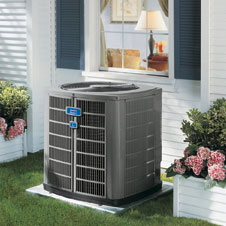
 Illustrative editorial imagery · Not an Able Air job-site photograph
THE COMFORT TAKEAWAY
Start with the thermostat, visible power status, and accessible filter. Do not open the outdoor unit or test a capacitor yourself. A breaker that trips again, burned wiring, unusual odors, or a compressor that hums without starting needs professional diagnosis.
The short answer
If the indoor blower runs but the outdoor AC compressor does not, the system may be receiving a cooling call without completing the outdoor start sequence. Common causes include an incorrect thermostat setting, a tripped breaker or disconnect, a failed capacitor or contactor, restricted airflow, refrigerant or safety-control issues, wiring faults, or a worn compressor motor. Carrier and Trane both identify thermostat and power checks as sensible first observations, while warning that electrical and compressor repairs belong to a qualified professional. 1 2
If you smell burning, see smoke, hear repeated electrical clicking, or find water near electrical equipment, turn the system off and get help. Do not remove panels or handle wiring.
Safe checks before you call
Confirm the thermostat. Make sure it is set to Cool, the setpoint is below the current indoor temperature, and the display is active. If it uses batteries and the display is dim or blank, replace them according to the thermostat instructions.
Look at the electrical panel. From a dry location, check whether the HVAC breaker appears tripped. If it is in the middle position, you can identify the circuit and avoid repeatedly resetting it; if it trips again, leave it off and call for service. Tripping is a symptom of an electrical or equipment problem, not a repair.
Check the accessible filter. A severely blocked filter can restrict airflow and contribute to freezing or equipment stress. Replace it only with the specified size and type. Do not remove the outdoor condenser cover or reach inside the unit.
Observe, do not diagnose. Note whether the indoor fan runs, whether the outdoor fan runs, whether the unit hums, whether ice is visible, and whether the problem followed a power outage. These details help the technician.
Why the compressor may stay off
Thermostat or control signal. The thermostat may not be sending a proper call for cooling, or a control board or safety switch may be interrupting the sequence.
Power or disconnect problem. A breaker, fuse, service disconnect, or damaged connection can prevent the outdoor unit from receiving power. Never replace a fuse with a higher rating or bypass a safety device.
Capacitor or contactor failure. The compressor needs a strong electrical start. A failed capacitor or contactor can leave the outdoor unit silent, make it hum, or cause the fan and compressor to behave differently. These components can retain dangerous electrical energy even after power is switched off.
Airflow, refrigerant, or safety lockout. A blocked filter, dirty coil, low refrigerant condition, or control fault may cause the system to shut down or prevent normal operation. DOE explains that a central AC depends on coordinated indoor and outdoor components, airflow, correct refrigerant charge, and unobstructed equipment placement. 3
Motor or compressor wear. The compressor motor can eventually fail. A technician must test the system and compare repair options with the equipment’s age, condition, and replacement outlook.
What if the indoor fan runs but the outside unit does not?
That symptom usually means the thermostat and indoor air handler are operating, while the outdoor cooling circuit is not completing its start sequence. It does not identify one guaranteed failed part. The outdoor disconnect, contactor, capacitor, safety controls, wiring, refrigerant condition, and compressor all need to be considered.
Do not keep lowering the thermostat or repeatedly cycling the system. If the indoor fan is blowing room-temperature air, turn cooling off after noting the symptom and schedule service. Repeated starts can increase stress on a faulted component.
What if the AC stopped after a power outage?
First verify the thermostat and observe the HVAC breaker from a dry, safe location. Some systems also have an accessible indoor service switch, but do not open equipment or remove a disconnect cover. If the breaker trips again, the outdoor unit remains silent, or the system makes a loud hum, leave it off. A post-outage failure may involve a surge, control issue, capacitor, contactor, or another electrical fault that requires testing.
Carrier notes that basic thermostat and power checks can rule out simple issues, but persistent failure should be evaluated by a qualified HVAC professional. 1
When should you call an HVAC professional?
Call promptly when the compressor does not start after the safe checks, the breaker trips again, the unit hums or clicks without starting, the outdoor fan behaves abnormally, ice appears, the system smells burned, or the indoor temperature is rising. Request urgent help when an electrical odor, smoke, exposed wiring, or water near electrical equipment is present; if there is an immediate electrical hazard, leave the area and contact emergency services or the appropriate utility.
A technician can verify voltage, controls, capacitor and contactor operation, airflow, refrigerant conditions, wiring, motor performance, and compressor health. ENERGY STAR includes thermostat settings, electrical connections, controls, coils, blower components, refrigerant, and filters in a proper maintenance check. 4
The Long Island next step
Before service, write down whether the indoor fan runs, whether the outdoor fan runs, what the thermostat displays, whether the breaker moved, and whether you saw ice or heard humming. Photograph the equipment label only if you can do so without opening anything.
Able Air Conditioning & Heating Corp. provides central AC service and repair across Nassau and Suffolk County. See HVAC service and repair, central air conditioning, or contact Able Air for the next step. Call (516) 764-4300 when the compressor will not start and the home is losing cooling.
A few more good questions.
Can I reset the AC breaker if the compressor will not start?
You may observe whether the HVAC breaker is tripped from a dry, safe location, but do not repeatedly reset it. If it trips again or the AC remains off, leave it off and call a qualified professional.
Why is my AC fan running but the compressor is not?
Possible causes include a thermostat or control issue, outdoor power problem, failed capacitor or contactor, safety lockout, refrigerant issue, wiring fault, or compressor motor failure. The symptom alone cannot identify the part.
Is an AC capacitor safe for a homeowner to replace?
No. Capacitors can retain dangerous electrical energy. Do not open the condenser or attempt capacitor testing or replacement; have a qualified HVAC technician diagnose and repair it.
Keep learning
Primary sources and further reading behind this guide.